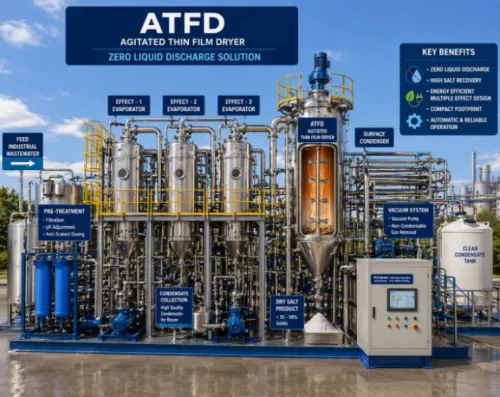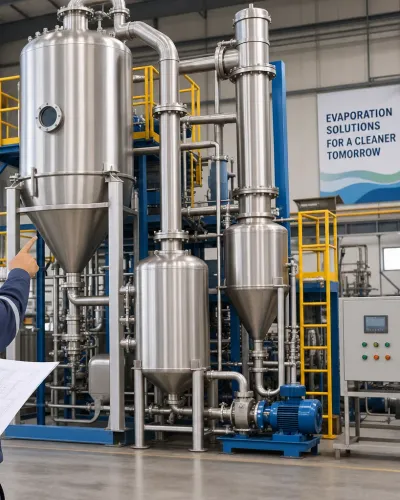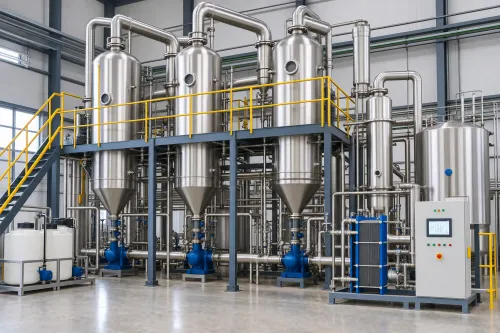
A multiple-effect evaporator can remove a large quantity of water from industrial effluent, but its concentrated outlet may still contain enough moisture to remain pumpable. If a plant’s treatment objective requires a solid residue, an agitated thin film dryer can provide the next thermal-processing step.
Understanding the transition from MEE concentrate to dry solids helps engineers prevent bottlenecks between these two systems.
How an ATFD Processes Concentrate
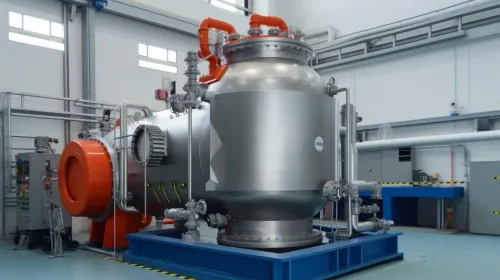
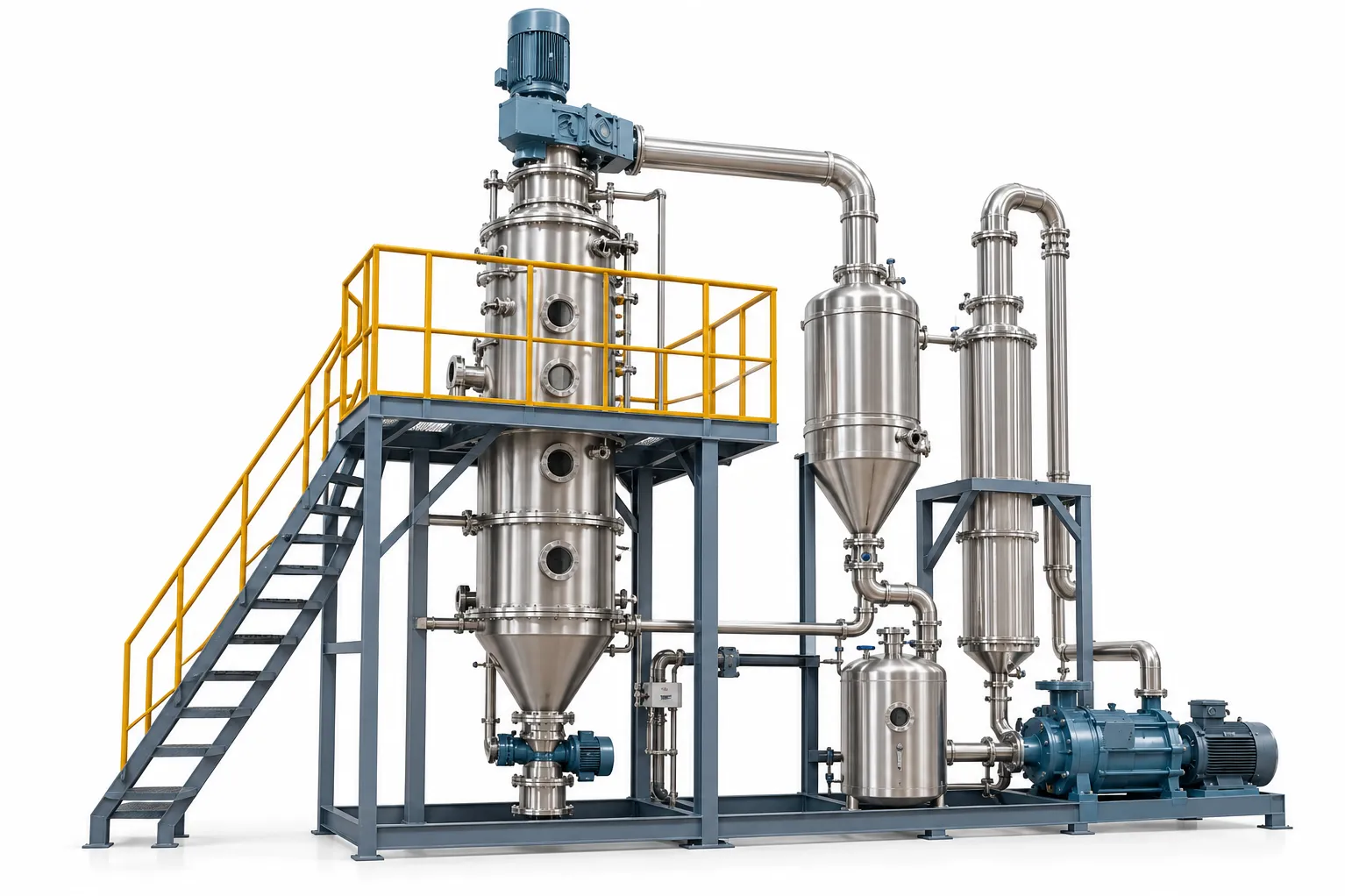
The concentrate enters a heated cylindrical body containing a rotating assembly. Blades distribute the material over the inner heated surface and continuously renew the film.
As moisture evaporates, the material becomes progressively more concentrated. Mechanical agitation limits the formation of a stationary insulating layer and assists movement toward the discharge.
The resulting material may leave as powder, flakes, granules or partially dried solids. Its form depends on salt composition, organic content, operating temperature and mechanical design.
Why the MEE-ATFD Interface Matters
An MEE and ATFD must be designed as connected process stages. If the MEE delivers feed below the expected solids concentration, the dryer receives excess water and may not achieve its rated throughput. If the feed becomes too concentrated, it may be difficult to pump or distribute.
A buffer or feed tank can reduce short-term fluctuations, but it cannot correct a persistent mismatch between the two systems.
Key interface conditions include:
- Feed concentration range
- Temperature at the MEE outlet
- Transfer-line heat loss
- Slurry viscosity
- Pump selection
- Tank agitation
- Maximum storage time
- ATFD turndown capacity
The transfer system should avoid settling, crystallisation and plugging.
Product Behaviour Determines Performance
Two concentrates with the same solids percentage may dry very differently. Sodium-rich inorganic streams may crystallise readily, while concentrates containing organics can become sticky or form a hard film.
Hygroscopic salts may absorb moisture after discharge. Heat-sensitive organics may degrade if wall temperature or residence time is excessive. Certain mixtures can foam when exposed to vacuum.
This is why feed trials are valuable. They provide practical evidence about deposition, discharge behaviour and attainable moisture content.
Managing Heat Transfer
Efficient drying requires close contact between the concentrate and heated wall. Deposits create resistance and reduce evaporation capacity.
The rotor and blade system must spread the feed evenly, disturb the boundary layer and remove material before a thick deposit develops. Heating-medium temperature should provide sufficient driving force without causing product degradation.
Operators can track motor load, wall temperature, vapour rate and product condition to detect changes. Rising motor current may indicate increased viscosity or accumulation inside the dryer.
Vapour Handling Under Vacuum
Many ATFD systems operate under vacuum to reduce boiling temperature and support moisture removal. Vapour passes through separation and condensation equipment before collection.
The vapour system should prevent solids carryover and maintain the required pressure. A blocked vapour line, inadequate condenser or air leakage can lower dryer capacity.
Where the feed contains volatile contaminants, condensate may require additional treatment before reuse. Its expected quality should be considered during the process-design stage.
Solid Collection and Disposal
Producing solids does not complete the wastewater-management process. The residue must be collected safely, characterised and handled according to the applicable requirements.
Dust control, enclosed discharge and suitable containers may be required. If the solids are hot, sticky or hygroscopic, the collection arrangement must accommodate those characteristics.
The plant should establish how frequently containers are changed and how operators avoid exposure or spillage.
Application in Vadodara Industries
Chemical and pharmaceutical operations in Vadodara and other Gujarat industrial centres may generate high-TDS concentrates with widely varying salt and organic compositions. Equipment sizing must reflect this variability.
Chemie Prozessors develops thin-film drying and evaporation solutions based on feed analysis, trial observations and integration requirements. Coordination between the MEE, transfer system, ATFD and condenser is particularly important in continuous ZLD operations.
An agitated thin film dryer in Vadodara can be an effective final concentration stage when the feed is properly characterised. Stable upstream concentration, reliable transfer and suitable solids handling are just as important as the dryer’s nominal evaporation capacity.
Keywords