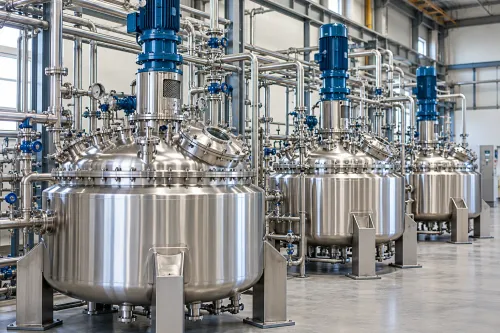
Industries generating high-total-dissolved-solids effluent may find that conventional biological treatment and membrane filtration cannot produce an acceptable final reject stream. A zero liquid discharge system is designed to maximise water recovery and convert the remaining contaminants into a concentrated or solid form for appropriate handling.
ZLD is not one standard machine. It is a treatment philosophy implemented through a sequence of technologies selected for the wastewater composition and recovery objective.
What Zero Liquid Discharge Actually Means
A ZLD facility aims to prevent routine discharge of liquid waste from the defined treatment boundary. Treated water is recovered for reuse, while salts and other non-volatile contaminants are separated as concentrated slurry or solids.
The exact system can include:
- Equalisation and pH correction
- Physical and chemical treatment
- Biological treatment
- Clarification and filtration
- Ultrafiltration
- Reverse osmosis
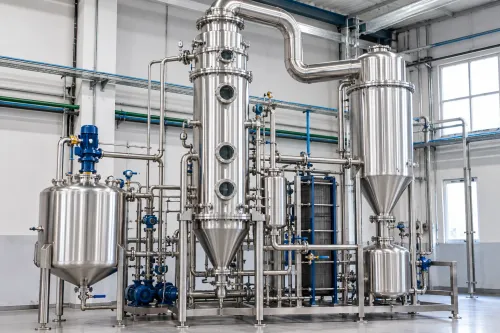
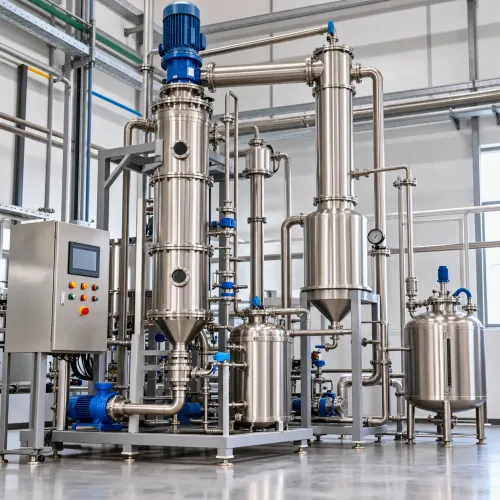
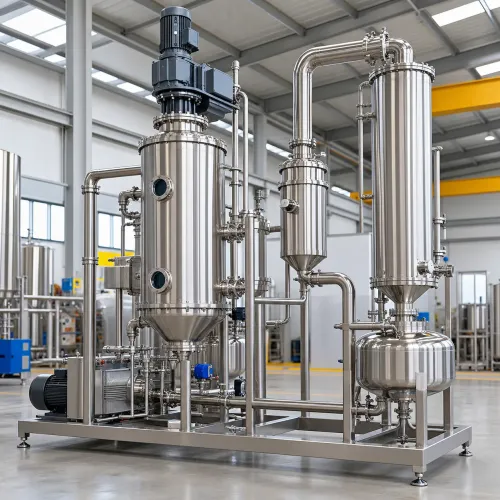
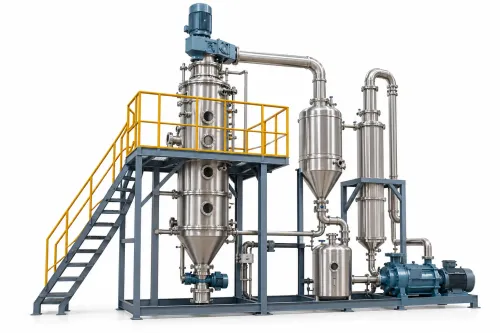
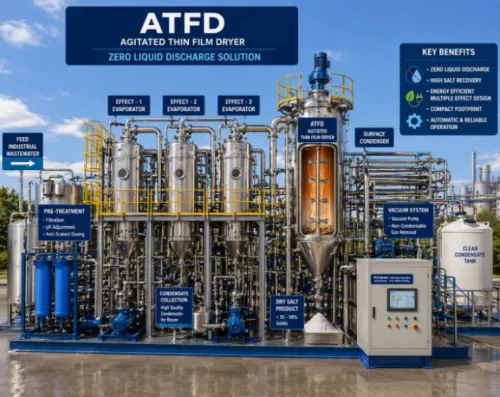
- Multiple-effect evaporation
- Crystallisation
- Agitated thin film drying
- Condensate polishing
Not every project needs every stage. The process should be built around a complete water and solids balance.
Why High-TDS Wastewater Is Difficult
Dissolved salts remain in the liquid when water evaporates. As concentration increases, these salts can reach saturation and begin to crystallise. Some form hard deposits on tubes and heat-transfer surfaces, while others create sticky or hygroscopic solids that are difficult to handle.
Organic compounds may cause foaming, odour, colour or elevated condensate contamination. Silica, hardness and suspended solids can increase scaling risk.
Effective pretreatment reduces the load reaching expensive thermal equipment. Installing an evaporator without controlling upstream variability can result in excessive cleaning and unstable operation.
A Practical ZLD Process Sequence
The first priority is segregation. Relatively clean streams should not be mixed unnecessarily with high-strength wastewater because this increases hydraulic load and treatment cost.
After equalisation, chemical treatment may remove hardness, metals or suspended solids. Biological treatment may be used where biodegradable organics are present. Membranes then recover a significant portion of water, leaving a smaller reject volume for evaporation.
An MEE concentrates the reject further. The concentrated slurry may pass to a crystalliser, centrifuge or ATFD, depending on salt characteristics and the required final form.
Recovered condensate is tested and, if necessary, polished before reuse in cooling towers, washing or other suitable applications.
Data Required Before Selecting the System
A representative wastewater analysis should include:
- Flow variation across shifts and campaigns
- Total dissolved and suspended solids
- Chemical oxygen demand
- Biological oxygen demand
- Chlorides, sulphates and hardness
- Silica and heavy metals
- pH and alkalinity
- Volatile organic content
- Ammonia and other volatile contaminants
- Expected changes after concentration
Multiple samples may be necessary for batch plants because a single analysis may not represent worst-case conditions.
Evaluating Lifecycle Cost
Thermal evaporation is energy-intensive. Project evaluation should include steam, electricity, cooling water, cleaning chemicals, labour, membrane replacement and residue-disposal costs.
Heat recovery, multi-effect operation and mechanical vapour recompression may improve energy performance in suitable applications. However, the most economical configuration depends on operating hours, utility prices and feed chemistry.
Water-reuse savings and reduced freshwater demand should also be included in the lifecycle assessment.
ZLD Requirements in Vadodara’s Industrial Region
Vadodara and nearby Gujarat industrial belts contain chemical, pharmaceutical, engineering and speciality manufacturing units with varied wastewater characteristics. Space constraints, changing production campaigns and existing effluent-treatment infrastructure often influence how a ZLD project is configured.
Chemie Prozessors can assess evaporation, concentration and thermal drying requirements within the overall treatment sequence. This allows interfaces between the MEE, condensate system and final dryer to be considered during engineering.
Indicators of a Well-Prepared ZLD Project
A project is ready for detailed evaluation when the plant has reliable flow data, representative analysis, source-segregation information, a defined water-reuse plan and a realistic method for managing recovered solids.
A zero liquid discharge system in Vadodara should be selected through process testing and mass-balance calculations not from recovery percentages alone. Careful pretreatment and proper integration of membrane and thermal stages can improve water recovery while controlling energy consumption, scaling and residue-handling problems.
Keywords