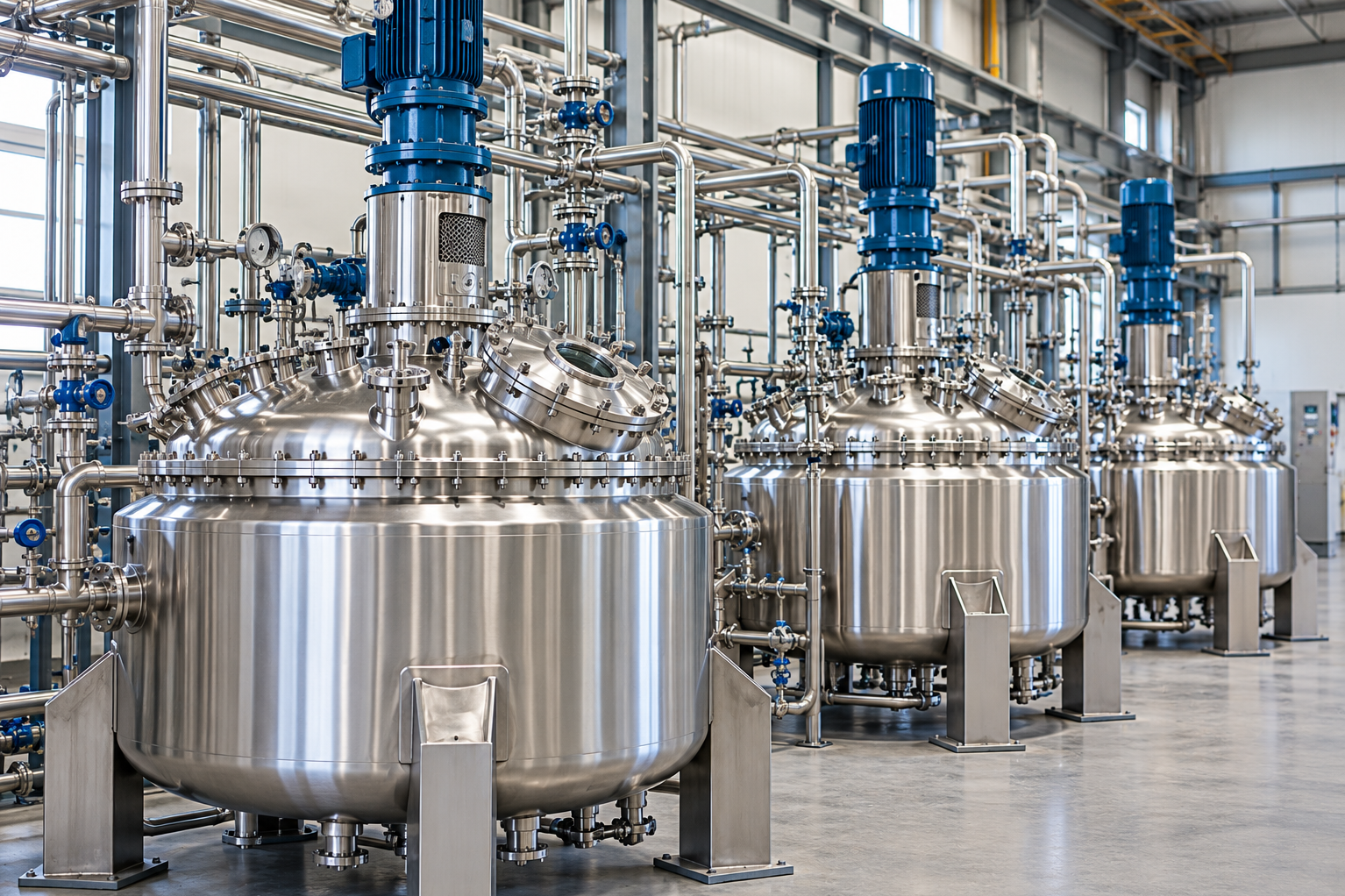
A reactor is central to many chemical and pharmaceutical processes. It may be used for mixing, neutralisation, polymerisation, hydrogenation, crystallisation or another controlled transformation. Its design influences product quality, heat removal, batch time, operator safety and downstream processing.
Selecting an industrial reactors manufacturer in Vadodara therefore requires a detailed review of process duty, mechanical design and manufacturing controls.
Define the Reaction Before Defining the Vessel
A reactor is not simply a tank with an agitator. The manufacturer needs to understand how the process behaves.
Essential information includes:
- Batch size and working volume
- Reactants and products
- Operating temperature and pressure
- Reaction heat
- Addition sequence
- Gas generation or consumption
- Viscosity changes
- Solid suspension requirements
- Foaming tendency
- Hazardous characteristics
- Cleaning and containment needs
For an exothermic reaction, the maximum heat-release rate may be more important than the average jacket duty. Emergency scenarios should also be evaluated.
Select the Correct Agitation System
The impeller must deliver the mixing result required by the process. Duties may include blending miscible liquids, dispersing gas, suspending solids, transferring heat or handling viscosity changes.
Impeller type, diameter, rotational speed, baffle arrangement and motor power should be selected together. A high motor rating does not guarantee effective mixing if the flow pattern is unsuitable.
Scale-up from laboratory to production requires care. Matching rotational speed alone may produce very different mixing conditions in the larger vessel.
Examine Heating and Cooling Requirements
Reactors may use jackets, limpet coils, internal coils or external circulation loops for thermal control. Selection depends on heat duty, pressure, cleanability and available surface area.
The engineering calculation should include heat-transfer coefficients, utility temperatures, fouling allowance and the time required to heat or cool the batch.
If the process passes through a high-viscosity stage, heat transfer and agitation may decline simultaneously. The design should account for the most difficult part of the batch.
Confirm Pressure and Material Specifications
Design pressure and temperature should cover normal operation, start-up, shutdown and credible upset conditions. Vacuum conditions must also be included where applicable.
Materials of construction should be selected using reaction chemistry, contaminants, temperature and cleaning agents. Stainless steel, carbon steel, duplex grades, nickel alloys or lined equipment may be appropriate depending on the application.
Gaskets, nozzles, thermowells, seals and agitator components must receive the same compatibility review as the vessel shell.
Review Safety and Control Features
The reactor should support the plant’s process-safety strategy. Depending on the duty, provisions may include:
- Pressure-relief devices
- High-temperature trips
- Agitator interlocks
- Low-level heating protection
- Nitrogen blanketing
- Emergency cooling
- Controlled dosing
- Flameproof electrical equipment
- Earthing and bonding
- Closed sampling
The user remains responsible for the overall hazard analysis, but equipment design must reflect its findings.
Inspect Documentation and Quality Control
Procurement teams should request approved drawings, material certificates, welding records, inspection reports, pressure-test certificates and instrument documentation.
The quality plan should define hold points and third-party inspection requirements. Agitator run testing, dimensional verification and surface-finish checks may be important before dispatch.
Clear nozzle orientation and maintenance clearances reduce site modifications during installation.
Advantages of Vadodara-Based Coordination
Vadodara serves a broad network of chemical, pharmaceutical and engineering plants across Gujarat. Local manufacturing coordination can support site visits, drawing discussions, inspection and commissioning.
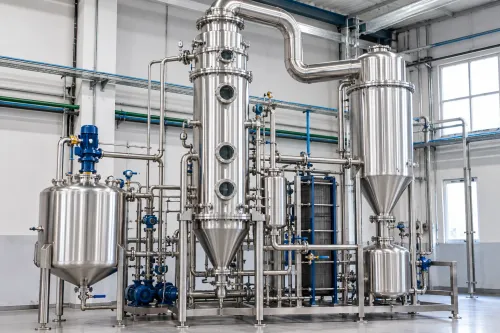
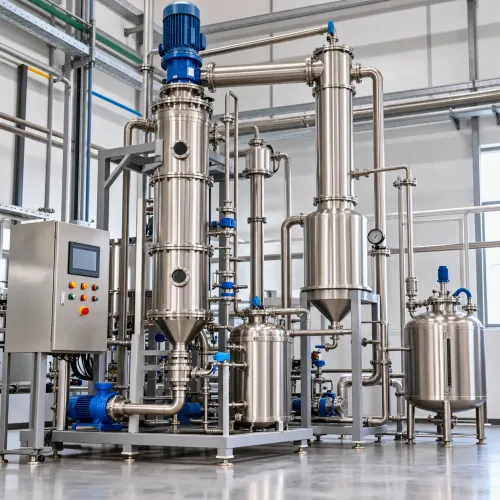
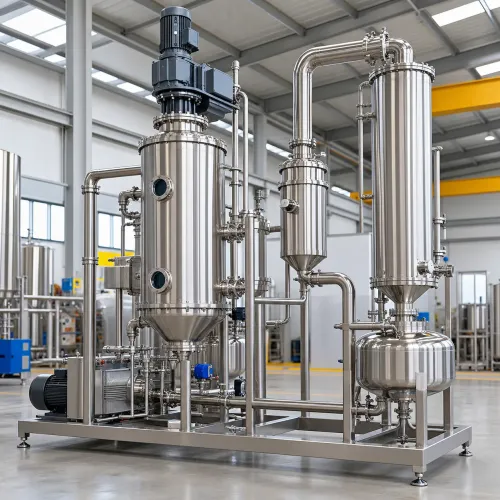
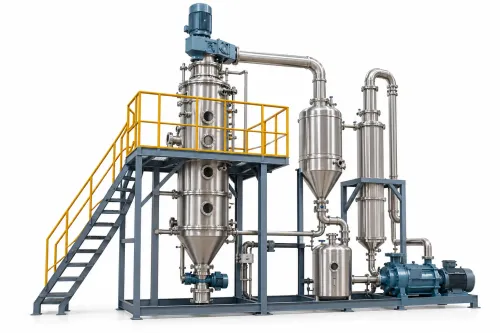
Chemie Prozessors develops process equipment based on operating requirements rather than treating the vessel as a catalogue item. Buyers can discuss reactor duty alongside connected condensers, heat exchangers, receivers, and evaporation equipment.
A capable industrial reactor manufacturer in Vadodara should translate process information into a safe, maintainable mechanical design. The strongest procurement decision combines mixing performance, thermal control, metallurgy, documentation and lifecycle service not simply vessel volume and purchase price.
Keywords