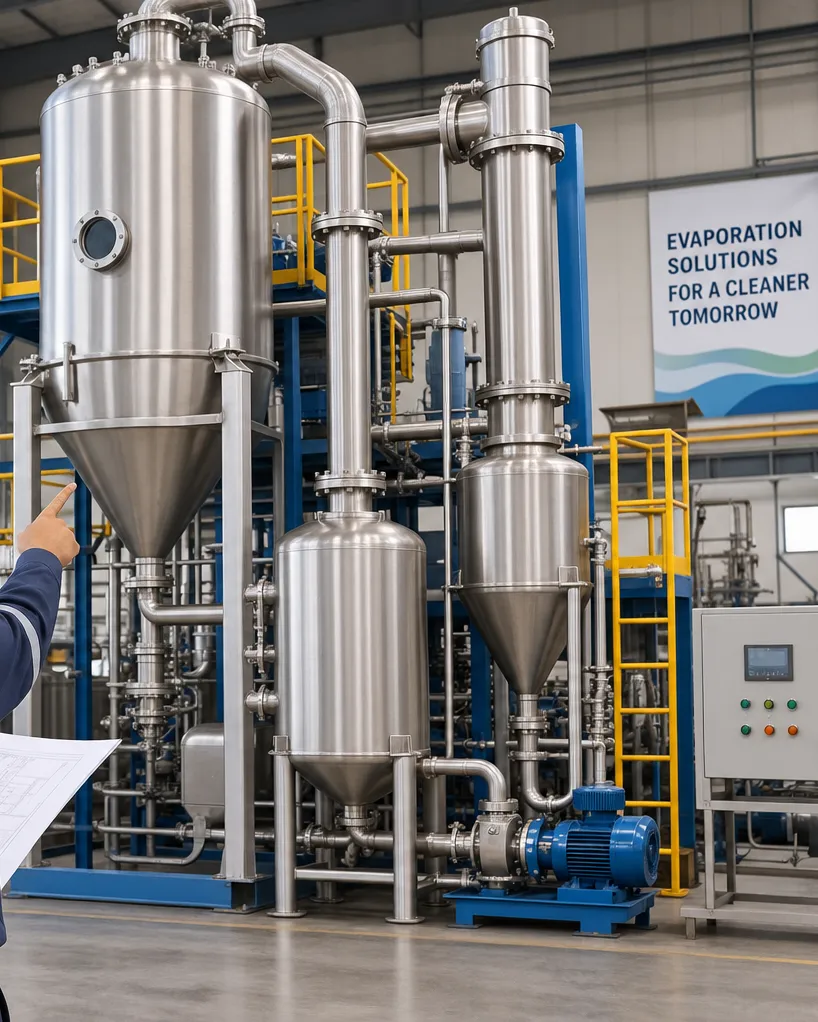
Industrial evaporation becomes challenging when a liquid foams, scales, crystallises, corrodes equipment or becomes viscous during concentration. In such applications, selecting equipment solely by evaporation capacity can lead to reduced output, frequent cleaning and unpredictable operating costs.
The role of an industrial evaporator manufacturer is to match the equipment configuration to how the process liquid behaves throughout the concentration cycle.
Begin With the Separation Objective
An evaporator may be required to recover solvent, concentrate a product, reduce wastewater volume, prepare a stream for drying or support a zero liquid discharge process. Each objective creates different design priorities.
Product concentration may demand precise temperature control and short residence time. Effluent concentration may place greater emphasis on fouling tolerance and maintainability. Solvent recovery may require careful condensation, vapour containment and suitable hazardous-area provisions.
Defining the required inlet and outlet conditions prevents the project from being reduced to a generic litres-per-hour calculation.
Identify Changes That Occur During Concentration
Process liquids rarely behave the same way at the inlet and outlet. As volatile material is removed:
- Dissolved-solids concentration increases
- Viscosity may rise sharply
- Boiling-point elevation may increase
- Salts can approach saturation
- Foaming characteristics may change
- Heat-transfer performance may decline
- Corrosive species may become more concentrated
Design data should therefore cover the expected concentration range rather than only the initial feed sample.
For a new or variable process, laboratory evaluation or pilot testing can show whether the liquid forms deposits, remains pumpable and separates cleanly from vapour.
Compare Evaporator Configurations Carefully
Different evaporator types solve different processing problems.
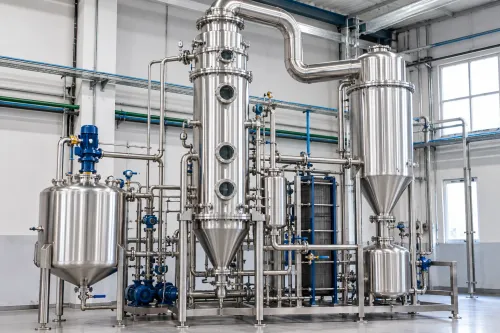
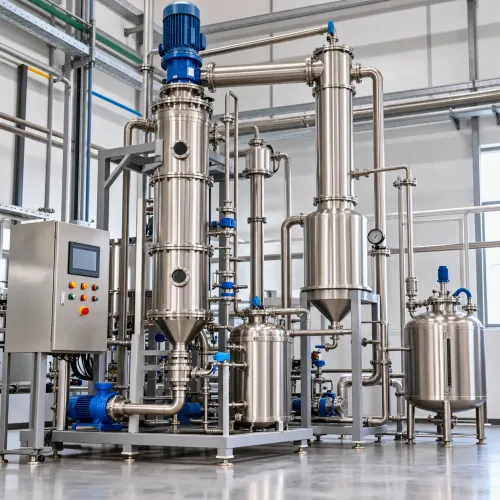
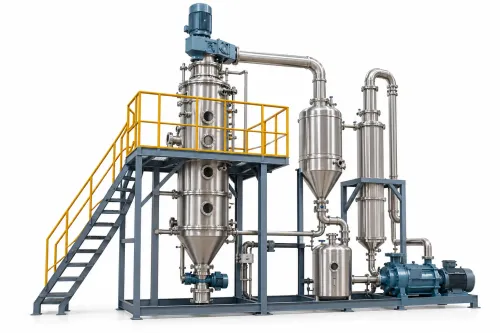
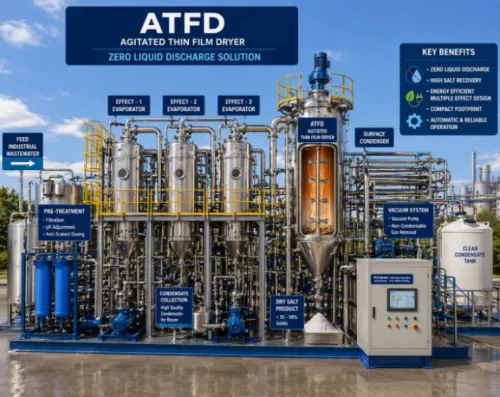
A falling film evaporator is often considered when short residence time and efficient heat transfer are important, provided the liquid can distribute properly across the tubes. Forced-circulation designs may be better suited to scaling or crystallising duties because higher circulation velocity can limit deposition.
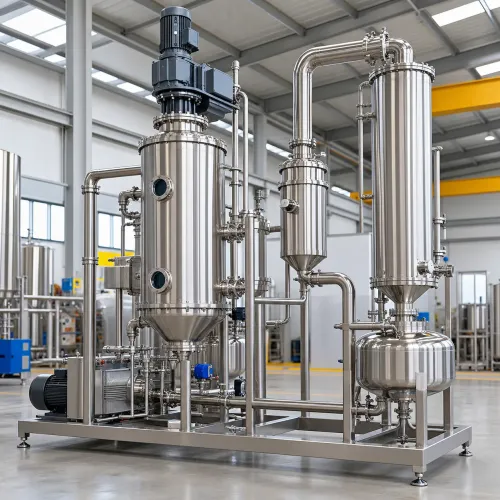
Wiped film equipment is useful for viscous or heat-sensitive products that benefit from a thin, continuously renewed film. Multiple-effect arrangements improve steam utilisation when sufficient temperature driving force is available.
The best configuration depends on product behaviour, utilities and operating priorities not simply on which technology is most advanced.
Review Materials of Construction
Material selection should be based on operating temperature, chemical composition, chloride level, pH, cleaning chemicals and expected concentration. A material that performs adequately in dilute feed may not remain suitable after the corrosive constituents have been concentrated.
Depending on the process, the system may use carbon steel, stainless-steel grades, duplex materials, nickel alloys or other specialised materials. Gaskets, mechanical seals, instruments and piping components also need compatible specifications.
A credible manufacturer should explain the basis of material selection and identify areas where corrosion allowance, lining or upgraded metallurgy may be necessary.
Evaluate the Entire System
An evaporator does not operate independently. Its performance depends on feed preparation, vapour separation, condensers, vacuum equipment, recirculation pumps, product discharge, instrumentation and utilities.
Procurement teams should review whether the proposal includes:
- Process and instrumentation diagrams
- Heat and mass balance
- Utility-consumption estimates
- Equipment and instrument lists
- Control philosophy
- Cleaning provisions
- Safety interlocks
- Inspection and testing requirements
- Installation boundaries
- Commissioning support
This review helps expose exclusions before commercial comparison.
Consider Vadodara’s Industrial Operating Conditions
Manufacturing units in Vadodara, Ankleshwar, Bharuch, Dahej and other Gujarat industrial clusters may process complex chemical and pharmaceutical streams. Seasonal cooling-water temperatures, utility limitations, variable effluent loads and site congestion can materially affect plant performance.
Chemie Prozessors, based in Vadodara, can assess these factors while developing evaporation and thermal-processing systems. Local coordination may also make site discussions, layout clarification and service planning more practical.
Ask Performance-Based Questions
Before placing an order, ask how the proposed capacity was calculated, what assumptions were used and how performance will be verified. Clarify the expected turndown, cleaning interval, steam consumption, condensate characteristics and maximum outlet concentration.
A dependable industrial evaporator manufacturer in Vadodara should connect equipment selection with measurable process conditions. This approach helps the plant obtain consistent capacity, manageable cleaning requirements and an evaporation system that performs beyond its initial commissioning trial.
Keywords