A dryer that looks empty can still contain reactive intermediates, solvent vapour, toxic residue or combustible dust. You will be able to isolate, clean, inspect, document and safely release the unit for its next trial, while recognising when the residue or batch size calls for a different process.
Key takeaways
- Isolate feed, discharge, vacuum and utilities before opening the dryer.
- Select cleaning chemistry and temperature from the residue’s hazards and solubility.
- Inspect rotor clearance, seals, scraper edges and deposits for trial-related damage.
- Release the dryer only after cleanliness, dryness and readiness checks are documented.
Shut Down, Isolate and Decontaminate Before Opening
Do not open the dryer because its sight glass looks empty. Reactor material can remain reactive, solvent-rich, toxic or combustible in the feed line, chamber, rotor, discharge outlet, condenser and vacuum line. An agitated thin film dryer pilot plant for care after reactor trials needs a controlled handover before anyone breaks containment.
1. Stop feed and heating, allow the rotor to coast to a complete stop, and record pressure, temperature, vacuum and abnormal events. Depressurise to a verified safe point, break vacuum by the approved method, drain all low points and cool surfaces below the site’s opening limit.
2. Isolate electrical power, steam or thermal fluid, nitrogen, compressed air, cooling water, vacuum and connected reactor lines. Apply a documented lockout/tagout procedure, test for zero energy, close and cap open connections, and identify every isolation point on the permit.
3. Decontaminate the feed line, drying chamber, rotor and scraper area, discharge outlet, condenser and vacuum line using the trial-specific method. Do not select a cleaner until the residue hazard, polymerisation risk, incompatible-cleaner list and waste route are confirmed.
4. Complete a signed handover from the reactor-trial team to the evaporation-equipment team. Attach current safety data, residue identity, expected salt type, photographs of deposits, abnormal-event notes and explicit permission to open.
5. Before opening, check the decontamination result and atmosphere against site limits. After opening, examine seal leakage history, barrier-fluid or seal-pot condition, flush-line blockage, pressure, temperature and contamination; crystallised solids can damage a seal without causing leakage during the trial.
Never store the dryer wet with chloride liquor, mother liquor or acid residue. Drain, dry or inert it as the materials and hazardous-area classification require.
Choose the Cleaning Method From the Residue, Not Habit
Use a residue-specific cleaning plan, not the water rinse used on the previous trial. Confirm the residue, expected salt, hazard, incompatible cleaners, exposed alloy, welds, gaskets and elastomers during a formal handover; attach the latest SDS, deposit photographs, abnormal-event notes and permission to open.
| Residue | Cleaning method | Main control |
|---|---|---|
| Water-soluble salt or mother liquor | Warm compatible water, followed by a validated final rinse | Drain low points; chloride-bearing liquor must not remain during storage |
| Sticky organic residue | Compatible solvent in a closed, recoverable flush | Check seal, hose and elastomer compatibility; control vapour and ignition sources |
| Polymerising residue | Keep wetted with the approved inhibitor or solvent, then remove under a validated temperature limit | Do not apply heat that accelerates cure or creates pressure |
| Corrosive or toxic residue | Closed-loop chemical flush with contained waste collection | Never mix acid, caustic, oxidiser or solvent streams |
| Hard crystallised deposit | Dissolve with the specified chemistry before gentle mechanical removal | Do not scrape rotor, scraper blades, sight glass or weld surfaces |
Clean every path, not just the drying chamber.
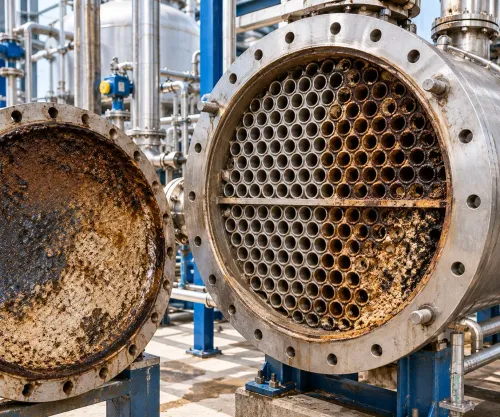
- Flush the feed line, chamber, rotor, scraper blades and discharge outlet; inspect dead legs and gasket faces.
- Clean the condenser, demister, vapour line, receiver, vacuum-side drains and pump inlet for carryover, salt and liquid slugging.
- Use dedicated compatible hoses and collect all rinsate as hazardous waste until its classification is confirmed.
Verify line clearance with rinse samples and targeted swabs, record volumes and pH or conductivity, and retain photographs. Dry or inert the equipment as its alloy and hazardous-area classification require, then cap connections; leaving acidic or chloride liquor inside turns cleaning into corrosion. This is core agitated thin film dryer care.
Use Condition Data to Find Wear and Process Damage
Routine operator care is appropriate only when condition data stays within the dryer manufacturer’s limits and no rubbing, leakage or contamination appears. Complete a formal handover before inspection: provide the latest safety data, incompatible-cleaner list, residue hazard, expected salt type, abnormal-event notes, deposit photographs and permission to open.
Inspect and record:
Rotor to wall clearance, using the approved method and dryer-specific tolerance. Do not impose a generic value; diameter, rotor design, temperature and mechanical tolerances determine acceptance.
Blade edge damage, deposits, fastener security, shaft runout, bearing noise, seal condition and evidence of contact with the heated wall.
Vibration, motor load, bearing temperature, vacuum stability and leak-test results against previous trial records. A rising trend matters before a limit is exceeded.
| Decision | Evidence | Action |
|---|---|---|
| Routine operator care | Stable readings, intact blades, no rubbing, controlled deposits | Clean with approved tools and record the trend |
| Qualified maintenance | Increased vibration, shaft runout, bearing heat, seal leakage or damaged scraper edges | Stop operation and arrange alignment, seal, bearing or rotor inspection |
| Controlled repair | Wall scoring, cracked welds, severe corrosion, seized rotor or repeated vacuum loss | Isolate, preserve evidence and approve a repair plan before work |
Aggressive scraping, impact tools and uncontrolled acid, caustic or chloride cleaning can create the damage you are trying to find. Atfd pilot plant maintenance needs calibrated instruments, trial-specific spares and qualified review when measurements move outside the manufacturer’s limits.
Prove the Dryer Is Clean, Dry and Ready for the Next Trial
Release the pilot dryer only after the handover record shows what was processed, what residue remained, which cleaner and rinse were used, and who authorised opening. Attach photographs, rinse or swab results, line-clearance confirmation, abnormal-event notes and the latest safety data sheet.
1. Record the final inspection of the chamber, rotor, scraper blades, feed line, discharge, condenser, demister, vapour line, receiver, vacuum pump and drains. Confirm no visible deposit, liquid, carryover or salt; document that the equipment is dry, capped and protected from dust and humidity.
2. Check storage controls: close and tag every opening, drain low points, isolate utilities, protect the rotor and seals from corrosion, and record storage temperature, humidity and preservation fluid where used. Include the next inspection date.
3. Verify in-date calibration for temperature probes, pressure and vacuum transmitters, tachometer, flow instruments and load cells. Keep the calibration certificates with the trial file, including as-found and as-left results; a clean machine with an unverified vacuum gauge is not ready.
4. Complete acceptance testing in stages: confirm correct assembly and rotor freedom, seal-flush or barrier-fluid connections, then leak-test the process circuit and verify vacuum hold. Run the rotor unloaded at low speed while checking rubbing, vibration, seal leakage and vacuum capacity; inspect condenser and demister performance.
Finish with a controlled feed of a safe surrogate or approved trial material, recording temperature, pressure, torque, feed rate and discharge. A no-load pass does not prove stable evaporation or chemical safety under load.
This signed package is the release record for reactor trial dryer upkeep.
Match the Pilot Service to the Batch and the Residue
A pilot dryer fits the reactor batch only when the feed remains pumpable, the solids load matches the rotor and discharge arrangement, and the residue will not react, polymerise or form an immovable crust at the planned wall temperature.
ATFD is a sensible post-trial step for concentrated slurry, salt-forming liquor or heat-tolerant wet solids; use another process when the material needs solvent recovery, controlled neutralisation or low-temperature containment.
1. Give the dryer team a formal handover before opening: material-safety information, incompatible-cleaner list, residue hazard, expected salt type, abnormal events, deposit photographs and written permission to open. Record feed composition, solids content, feed rate, heating-medium conditions, vacuum, rotor speed, outlet temperature, torque, condensate, product moisture and cleaning chemicals.
2. Ask the local provider to confirm site capability, not just “service available in Vadodara.” Request trained personnel, calibrated instruments and local critical spares for decontamination review, remote troubleshooting, field inspection, vibration and alignment checks, seal replacement, vacuum-system diagnosis and recommissioning.
3. Require a trial-specific kit matched to the actual bill of materials: mechanical-seal parts, gaskets, rotor fasteners, demister components, thermocouples, vacuum-side seals, sight-glass parts and compatible cleaners. Nominal dryer diameter is not enough.
4. Include rotor-to-wall clearance, blade condition, shaft runout, bearings and rubbing evidence in the handover. Chemie Prozessors can be evaluated against this checklist when comparing ATFD pilot plant support in Vadodara.
Related products
 | ₹750000 Product Details: Capacity(kg) 150 Automation Grade Automatic Usage/Application Industrial Material Stainless Steel Power Source Steam / Thermic Fluid... View product → |
 | ₹749999 Product Details: Capacity(kg) 150 Material Stainless Steel Power Source Steam / Thermic Fluid / Electric Usage/Application Industrial Country of... View product → |
Frequently asked questions
What must you isolate before opening an agitated thin film dryer after a reactor trial?
Isolate the feed line, dryer chamber, discharge outlet, condenser and vacuum line, then verify pressure, temperature and hazardous-energy controls before breaking containment.
How do you choose a cleaning method for an ATFD pilot plant?
Base the method on the residue’s solubility, reactivity, toxicity, flammability and heat sensitivity rather than using the same solvent or wash cycle for every batch.
Which parts need inspection during ATFD pilot plant maintenance?
Inspect the rotor, scraper or wiper edges, chamber surfaces, seals, bearings, discharge path, condenser and vacuum line for wear, deposits and process damage.
How do you prove an agitated thin film dryer is ready for the next trial?
Document visual cleanliness, removal of residue, dryness, absence of leaks or abnormal wear, and completion of the approved handover and readiness checks.
Keywords