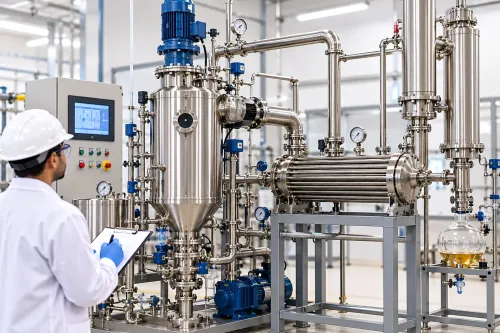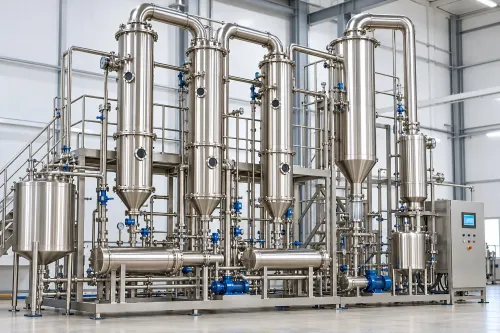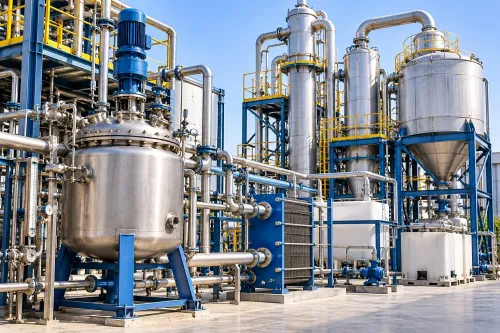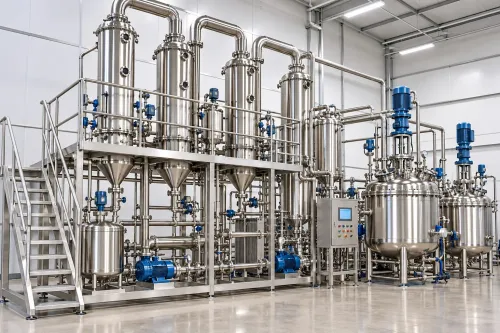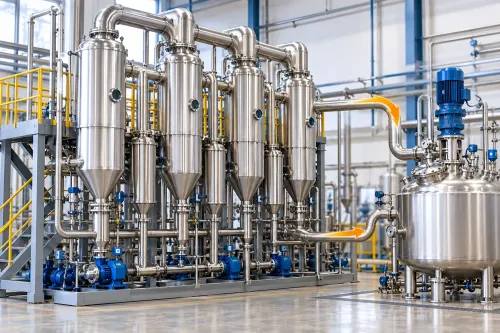
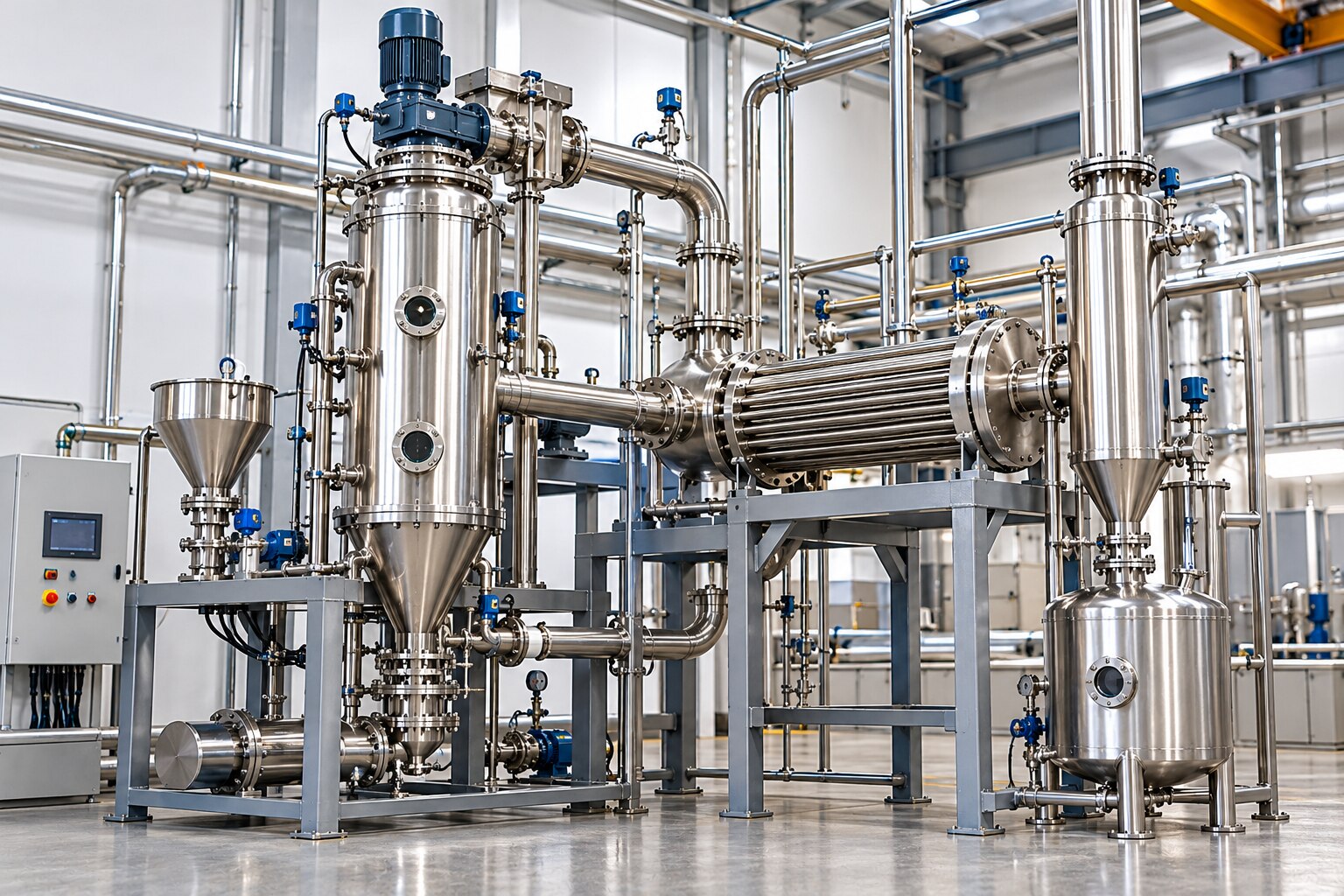
A heat exchanger attached to an ATFD can mean the dryer heating surface, a feed preheater, a vapor condenser, or a heat-recovery unit, and each option changes the specification. By the end, you will know how to define the process duty, test feed suitability, compare suppliers, and verify local delivery and commissioning claims.
Key takeaways
- Identify whether the quote includes a heated wall, feed preheater, condenser or heat-recovery skid.
- Confirm feed viscosity, solids, fouling risk and heat sensitivity before selecting an ATFD.
- Size the dryer from kilograms per hour of water evaporated, not tank volume.
- Require rotor, cleaning, solids discharge, delivery and commissioning details in writing.
Define What “With Heat Exchanger” Means Before You Request a Quote
A quoted “heat exchanger” can mean the ATFD’s heated cylindrical wall or jacket, an external feed preheater, a vapour condenser, or a separate heat-recovery skid. These items have different design pressures, temperatures, materials, inspection requirements and utility connections, so “steam heated” is not a complete specification.
Before requesting an ATFD heat exchanger in Vadodara, identify the component and send this information:
- For the ATFD heating surface, request heat-transfer area, wall or jacket construction, rotor-side clearance, maximum wall temperature, heating-medium pressure and condensate-removal arrangement. State whether the unit operates under vacuum and obtain the calculated vacuum rating; external-pressure collapse can govern jacket design.
- For a shell-and-tube preheater or condenser, ask whether TEMA or API 660 applies. Do not impose either standard automatically on a wiped-wall or agitated dryer, whose heating surface has different mechanical and inspection criteria.
- Define the utility precisely: saturated-steam pressure and condensate conditions; hot-oil supply and return temperatures; or pressurized-hot-water pressure, supply temperature and return temperature. Include control range and allowable wall temperature.
If the system includes a separate heat-recovery skid, specify its exchanger type, circuit boundaries and tie-in points. That is the correct way to assess an “atfd agitated thin film for dryer heat exchanger in vadodara” specification: compare the actual component, not the word exchanger alone.
Check Whether Your Feed Belongs in an ATFD Process
An ATFD usually follows evaporation, crystallization, or another concentration step, where a slurry needs further water removal and controlled discharge. It is not a direct-feed machine for every wastewater stream.
1. Submit the feed envelope before requesting a design. State solids percentage, flow in kg/h, density, viscosity at operating temperature, particle-size distribution, chloride and bromide levels, pH, sulfide or oxidizing chemicals, foaming tendency, toxicity, and allowable feed temperature.
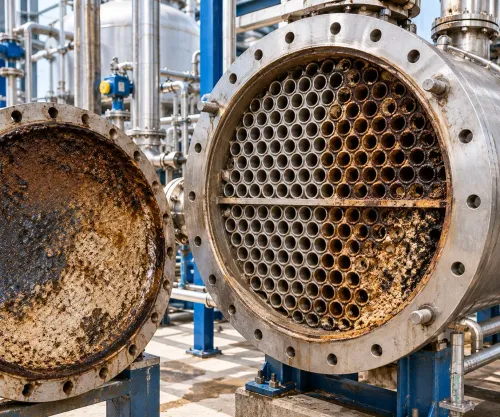
2. Describe what the feed actually contains: dissolved salts, suspended crystals, volatile organics, ammonia, or heat-sensitive compounds. The rotor renews the film on the heated wall, but wall crystallization can sharply reduce heat transfer and raise operating torque.
3. Check the process position and product target. An ATFD thermal equipment package may suit a salt-bearing concentrate that would foul a conventional evaporator, while a spray dryer, rotary dryer, paddle dryer, flash dryer, vacuum dryer, or crystallizer may better suit another product form or residual-moisture target.
4. Treat vapor and residue handling as part of the selection. Concentrating nonvolatile contaminants does not destroy them. If volatile carryover or aerosols are possible, specify a demister, condensate-quality limit, vapor-line pressure drop, condenser duty, vacuum system, and residue-handling route. Include odor control and hazardous-area requirements where the chemistry demands them.
Size the Dryer from Evaporation Duty, Not Nominal Volume
A 5,000 kg/h feed at 30% solids contains 3,500 kg/h water and 1,500 kg/h solids. At 70% discharge solids, discharge is 2,143 kg/h and water evaporation is 2,857 kg/h.
Give the supplier feed flow, feed solids, target discharge solids, allowable outlet moisture and operating hours; this balance, not shell volume or quoted feed capacity, sizes the dryer.
State boiling-point elevation, feed boiling temperature, allowable feed temperature, maximum product temperature, available temperature difference, expected wall-fouling rate and minimum stable turndown. Ask an agitated thin film dryer supplier for written guarantees covering:
- Evaporation rate in kg/h, heat-transfer-coefficient basis, thermal duty in kW and outlet solids
- Steam consumption and condensate rate, or thermic-fluid flow; electrical load and rotor power
- Maximum feed viscosity, allowable feed temperature and cleaning time
- If vacuum is proposed: condenser area, vacuum-pump capacity, non-condensable-gas load, air-leakage allowance and condensate carryover limit
| Evidence | What it proves | What it cannot prove |
|---|---|---|
| Water test | Mechanical operation and a clean heat-transfer surface | Capacity on a crystallising, viscous or corrosive slurry |
| Actual-slurry test | Evaporation rate under representative fouling and rheology | Full-plant reliability without commissioning data |
Require a demonstration recording evaporation rate, wall fouling, crystal habit, discharge torque, residence time and condensate quality. Compare suppliers on these guarantees, maximum viscosity and cleaning time—not shell diameter or motor rating.
Specify the Rotor, Cleaning Method and High-Solids Discharge
1. Specify how the rotor spreads incoming slurry into a thin film, renews the product-side boundary layer and scrapes the heated wall. Request the feed-distribution design, rotor speed range, blade or wiper material, scraper clearance, residence-time range, wall finish and access for internal inspection.
Crystallization can reduce heat transfer sharply when clearance, geometry or feed distribution is wrong.
2. Put the operating sequence in the specification: heat the wall and establish vacuum before feeding; ramp feed gradually; ramp heating within the stated wall-temperature limit; stop feed before normal heating shutdown; isolate utilities and depressurize for emergency shutdown.
Name the cleaning method, including water circulation, chemical cleaning concentrations and compatibility, and the mechanical access required when deposits cannot dissolve.
3. Treat final solids as a torque limit, not only an evaporation target. State maximum operating torque, start-up torque, gearbox service factor, torque-limiter setting, allowable crystal size and whether discharge is continuous or batch-assisted. Include discharge-valve design, residue cooling and the feed-pump pressure needed to prevent plugging.
4. Review the complete interface: vapor-line pressure drop, condenser duty, vacuum protection, condensate routing, odor control and hazardous-area classification. Select the heat-transfer surface from the concentrated liquor at operating temperature, not the dilute feed; chloride, bromide, sulfide, caustic, acid and oxidizing species can cause localized corrosion or chloride stress-corrosion cracking.
Require material certificates and a written compatibility review.
Verify Vadodara Availability, Delivery Scope and Commissioning Support
Industrial dryer availability in Vadodara means a committed delivery plan, not a website listing. Before treating an ATFD thermal equipment package as available, obtain these documents and responsibilities in writing:
1. Request the fabrication slot, rotor and gearbox delivery dates, heat-transfer-surface area, material certificates, approved weld procedures, non-destructive examination plan, and pressure or vacuum test procedure. State the design pressure and temperature for each heated or vacuum section.
2. Mark the installation boundary on a drawing. Confirm who pays for transport and unloading, checks foundation loads, performs alignment, connects feed and discharge piping, supplies electrical panels, installs insulation, and routes vapor and condensate lines. Include startup supervision, operator training, and plant performance testing.
3. Measure the dispatch route before fabrication ends. Check vessel height, width, lifting weight, bridge limits, turning radii, and oversize-load permissions; a finished dryer can wait at the factory if the truck or crane cannot reach your site.
4. Put service obligations into the purchase order: local response time, spare rotor or wiper availability, gearbox support, and the remedy if the guaranteed evaporation rate is missed. Require feed-specific test evidence rather than a water-test claim, plus written utility interfaces and commissioning responsibility.
Chemie Prozessors belongs in the comparison as a Vadodara-based manufacturer, but those documents—not proximity—should decide the purchase. Confirm condenser duty, vacuum protection, condensate routing, residue handling, and hazardous-area requirements before dispatch.
Related products
 | ₹749999 Product Details: Capacity(kg) 150 Material Stainless Steel Power Source Steam / Thermic Fluid / Electric Usage/Application Industrial Country of... View product → |
 | ₹750000 Product Details: Capacity(kg) 150 Automation Grade Automatic Usage/Application Industrial Material Stainless Steel Power Source Steam / Thermic Fluid... View product → |
Frequently asked questions
What can “with heat exchanger” mean in an ATFD quote?
It can mean the heated cylindrical wall or jacket, an external feed preheater, a vapour condenser or a separate heat-recovery skid. Ask the supplier to identify each item, its design pressure, temperature, material and utility connections.
Which feeds are suitable for an ATFD process?
An ATFD suits feeds that need concentration or drying and can tolerate its heat and residence time. Check viscosity, dissolved and suspended solids, fouling tendency, crystallisation behaviour, corrosivity and final-cake handling before requesting a design.
How do you size an ATFD?
Start with feed flow, feed-solids percentage, target product-solids percentage and required water evaporation in kilograms per hour. Then confirm heat-transfer area, steam or thermal-oil duty, vapour load, residence time and discharge capacity.
What should you specify for the ATFD rotor and solids discharge?
Specify rotor type and speed range, blade or wiper material, clearance, cleaning method, inspection access and the required solids outlet. Include whether the discharge is a dry powder, wet cake, paste or crystallised product.
What should you verify for ATFD availability in Vadodara?
Request a written delivery scope covering fabrication, testing, packing, transport, installation, piping, electrical work, insulation, commissioning, operator training, spares and performance testing. Confirm which activities the Vadodara supplier performs on site.
Keywords