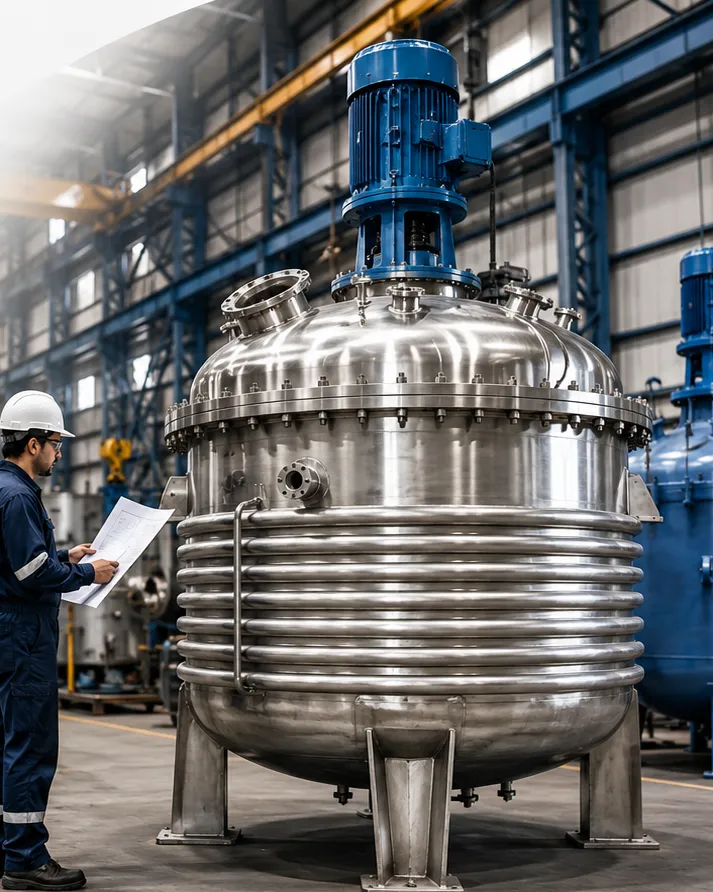
Industrial reactors are among the most important pieces of equipment used in manufacturing facilities. Whether producing specialty chemicals, pharmaceuticals, food ingredients, adhesives, dyes, or petrochemical products, the reactor directly influences product quality, production efficiency, and process safety. Choosing the right Industrial Reactor Manufacturer in Vadodara involves understanding both the production process and the engineering features that contribute to reliable long-term operation.
As one of Gujarat's leading industrial regions, Vadodara is home to numerous manufacturing plants that rely on process equipment designed for demanding operating conditions. Selecting a reactor based on technical requirements rather than initial cost alone can help improve operational performance and reduce lifecycle expenses.
What Is an Industrial Reactor?
An industrial reactor is a processing vessel where controlled chemical or physical reactions take place under specific operating conditions.
Depending on the application, reactors may be used for:
- Chemical synthesis
- Mixing and blending
- Polymerization
- Neutralization
- Dissolution
- Heating and cooling processes
- Crystallization
- Batch or continuous production
Each application requires equipment designed to suit the process, production volume, and material characteristics.
Types of Industrial Reactors
Different manufacturing processes require different reactor configurations.
Common reactor types include:
Jacketed Reactors
These reactors circulate heating or cooling media around the vessel to maintain precise process temperatures.
Limpet Coil Reactors
External limpet coils provide efficient heating and cooling for processes requiring enhanced temperature control.
Glass-Lined Reactors
Suitable for handling corrosive chemicals while minimizing contamination.
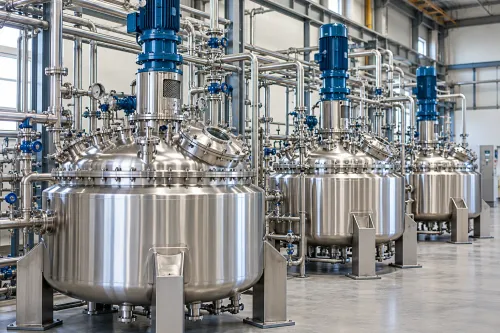
Stainless Steel Reactors
Widely used in pharmaceutical, food processing, and chemical manufacturing because of their durability and corrosion resistance.
Pressure Reactors
Designed for reactions carried out under elevated pressures while meeting applicable engineering standards.
Factors That Influence Reactor Selection
Selecting the appropriate reactor requires a detailed understanding of process requirements.
Important considerations include:
- Production capacity
- Operating temperature
- Design pressure
- Product viscosity
- Mixing requirements
- Heating and cooling needs
- Corrosion resistance
- Cleaning requirements
An engineering assessment helps ensure that the selected reactor performs efficiently under expected operating conditions.
Why Agitation Design Matters
The agitator plays a vital role in reactor performance.
Proper agitation helps achieve:
- Uniform mixing
- Better heat transfer
- Consistent reaction rates
- Improved product quality
- Reduced settling of solids
- Efficient blending of raw materials
Agitator selection depends on liquid viscosity, reaction characteristics, and production objectives.
Material Selection Is Equally Important
The reactor material should be compatible with the chemicals being processed.
Common material options include:
- SS304
- SS316
- SS316L
- Duplex stainless steel
- Carbon steel
- Glass-lined steel
- Special corrosion-resistant alloys
Selecting the appropriate material improves equipment life while reducing maintenance requirements.
Automation Improves Process Consistency
Modern industrial reactors often incorporate automated monitoring and process control.
Automation features may include:
- Temperature control
- Pressure monitoring
- Agitator speed control
- Level indication
- Automated dosing
- PLC and SCADA integration
- Safety interlocks
These systems help improve repeatability while reducing operator intervention.
Maintenance Supports Reliable Production
Routine maintenance helps maximize reactor performance throughout its service life.
Recommended practices include:
- Inspecting agitator components
- Monitoring seals and bearings
- Checking heating jackets
- Verifying instrumentation accuracy
- Cleaning internal surfaces
- Reviewing pressure safety devices
Preventive maintenance contributes to safer and more efficient plant operation.
Questions Procurement Teams Should Ask
Before selecting a reactor manufacturer, buyers should evaluate several important aspects.
These include:
- Can the reactor be customized for the process?
- Which material grade is recommended?
- What pressure standards are followed?
- How is quality testing performed?
- Is factory acceptance testing available?
- What commissioning support is provided?
- How are future capacity expansions accommodated?
Clear technical discussions help ensure that the equipment matches long-term production requirements.
Selecting an Experienced Reactor Manufacturer
Industrial reactors are designed for years of continuous operation, making engineering quality a key consideration. Procurement teams should evaluate manufacturing capability, design expertise, fabrication standards, documentation, testing procedures, and after-sales technical support before making an investment.
Manufacturers such as Chemie Prozessors develop industrial reactors tailored to individual production requirements across a variety of industries. For manufacturers in Vadodara and throughout Gujarat, selecting a properly engineered reactor can improve production efficiency, support consistent product quality, and provide dependable performance throughout the equipment's operational life.
Keywords